Table Of Content

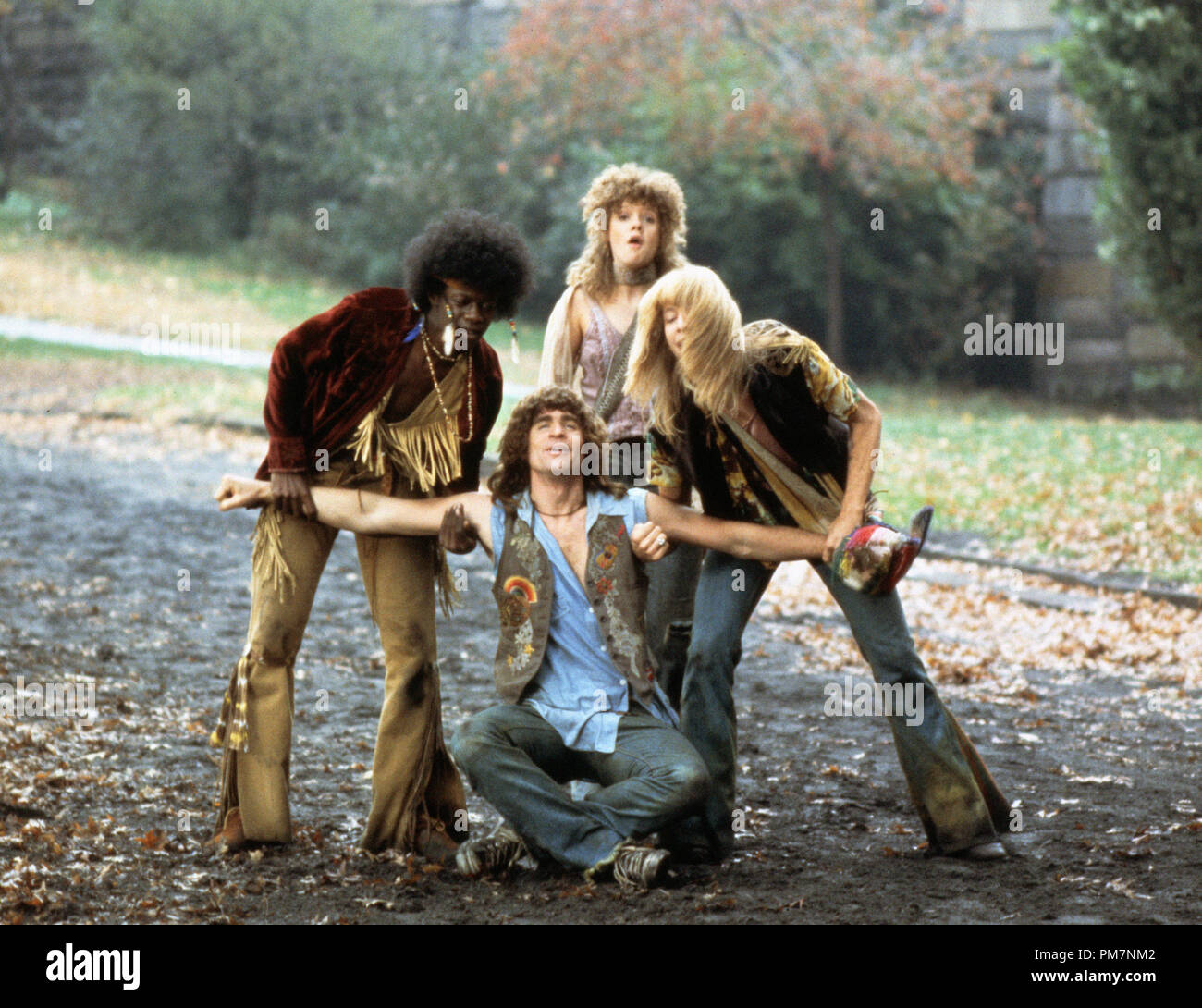
The film follows a wide-eyed young man from the Midwest, played by John Savage, as he arrives in New York City to join the army and finds himself drawn into the world of a group of hippies living in Central Park. It's a story that captures the spirit of the counterculture era and the clash between generations, all set to a killer soundtrack. A few years later, Forman directed the play's film adaptation, which won several Academy Awards, including Best Picture, Best Director, and Best Adapted Screenplay.
Let’s Not Forget Trudy Perkins was in the Film
'Bad Hair' Cast Congratulates Co-Star Kelly Rowland on Second Pregnancy (Exclusive) - Entertainment Tonight
'Bad Hair' Cast Congratulates Co-Star Kelly Rowland on Second Pregnancy (Exclusive).
Posted: Mon, 19 Oct 2020 07:00:00 GMT [source]
Annie Golden plays Jeannie Ryan, a free-spirited member of the hippie community. Treat Williams portrays George Berger, the charismatic leader of the hippie tribe. Robin Young Co-Host, Here & NowRobin Young brings more than 25 years of broadcast experience to her role as host of Here & Now. Hair was released on VHS by 20th Century Fox Video in 1982 with later VHS releases from MGM/UA Home Video (distributed by Warner Home Video).
The Film Won Hearts But Never Any Awards
He spent time with the creators, and the idea of a movie version kept coming up. The creators believed in astrology and refused to make any decisions without consulting their guru. Their endeavor was to help people experience what was happening on the streets – even if it was just a slice. And so, they drew inspiration from East Village youngsters, many of whom were rejecting mainstream society and dodging conscription during the Vietnam War.
Actor
With its authentic portrayal of the era, “Hair” enjoyed immense popularity, running for 1,750 shows on Broadway and inspiring 19 international productions by 1970. Despite a generally positive reception, the 1979 film adaptation failed to become a critical or commercial success. Many people believed the film fell short of the musical's message. The movie's producer was not planning on giving either of them up and asked them to play their musical roles in the movie too, which they gladly did. Their incredible vocal performances were showcased when the two took part in the unforgettable “ ” number. They went on to play roles in many other Broadway musicals, however, their part in “Hair” had become some sort of a hallmark.
Melba Moore and Ronnie Dyson Reprised Their Roles

After handing out imaginary pills to the tribe members, saying the pills are for high-profile people such as Richard Nixon, the Pope, and "Alabama Wallace", Berger relates how he was expelled from high school. Three tribe members dress up as principals in Hitler mustaches and swastika arm bands, mocking the American education system. He pretends to burn his Vietnam War draft card, which Berger reveals as a library card. We are not the only ones who think “Hair” is a must-watch classic.
And it remembers the conflicts in lifestyles, mostly strikingly in scenes between the young black man (Dorsey Wright) who has joined the hippies, and the mother of his child (Cheryl Barnes), whom he left behind. The rock musical that premiered off-Broadway in 1967 and on Broadway in 1968 captured the spirit of the countercultural movement of the time. Its creators, James Rado and Gerome Ragni drew inspiration from their lives and the people around them, even casting some original members from the hippie gatherings they attended.
Nude scene
The idea for “Hair” was born within the buzz and energy of the counterculture and hippie movement. Creators James Rado and Gerome Ragni wanted to capture the same excitement on stage. They believed it was important to bring to life a moment in time that might have been lost to history otherwise. Hair tells the story of the "tribe", a group of politically active, long-haired hippies of the "Age of Aquarius" living a bohemian life in New York City and fighting against conscription into the Vietnam War. Claude, his good friend Berger, their roommate Sheila and their friends struggle to balance their young lives, loves and the sexual revolution, with their rebellion against the war and their conservative parents and society.
Production Design
The journey of "Hair" from off-Broadway to Broadway began as a tale of two unemployed actors, James Rado and Gerome Ragni, who created a musical celebrating the hippie counter-culture. The show debuted at the Public Theatre in New York's East Village in 1967 and was scheduled for only fifteen previews and fifty performances. After a black-out, the tribe enters worshiping in an attempt to summon Claude ("Oh Great God of Power"). Claude gives Woof a Mick Jagger poster, and Woof is excited about the gift, as he has said he's hung up on Jagger. Three white women of the tribe tell why they like "Black Boys" ("black boys are delicious ..."), and three black women of the tribe, dressed like The Supremes, explain why they like "White Boys" ("white boys are so pretty ...").
Upon receiving his draft notice and leaving his family ranch in Oklahoma, Claude heads to New York and befriends a tribe of long-haired hippies on his way to boot camp. The film was also very personal for actor John Savage, who played Claude Bukowksi, the young man from Oklahoma headed for boot camp and then Vietnam. After wandering the city ("Where Do I Go?"), Claude finally reports to the draft board (“Black Boys/White Boys”), completes his enlistment, and is shipped off to Nevada for basic training. Claude Hooper Bukowski of Oklahoma is sent off to New York City after being drafted into the Army ("Aquarius"). Before his draft board-appointment, Claude explores New York, where he encounters a close-knit "tribe" of hippies led by George Berger. The same goes for the long dark, siren-like hair she has when first meeting Art and Patrick in 2006 and the medium-length cut seen in another flashback when Art asks her to be his coach.
It's fascinating to imagine what could have been if Madonna or Springsteen had been part of the film. The closing line, "The rest is silence," is a final nod to Hamlet, completing the powerful homage to two of Shakespeare's greatest works. By incorporating these iconic lines from Shakespeare, the filmmakers added depth and complexity to Berger's solo. It highlights themes surrounding love, loss, and the search for meaning in a changing world. John Savage was already a big name; however, Forman wasn’t about to let him go. Annie Golden, too, was already familiar, who impressed Forman when performing in "The Shirts." Together with these few recognized names, Forman collected fewer familiar faces and assembled a remarkable cast for the movie.
Cast Complete for 50th Anniversary Touring Production of Hair - Playbill
Cast Complete for 50th Anniversary Touring Production of Hair.
Posted: Fri, 10 Jun 2022 03:01:50 GMT [source]
It was a masterpiece that hadn’t been seen before, and Forman received praise and deliverance. George Lucas was not bypassed when the thoughts of a director for “Hair” came to the working table. The name Betty Buckley may not sound familiar at first, however, if we mention the “Walking in Space” song in the movie adaptation of “Hair,” you will know exactly what we are referring to. Buckley provides her beautiful voice to the Vietnamese girl in this song, providing a memorable and powerful scene. Beyond her musical prowess, D'Angelo's ability to convey a range of emotions with nuance and subtlety showcased her exceptional acting skills. Her portrayal resonated deeply, evoking laughter and tears, as she captured her character's hopes, dreams, and struggles and the era they represented.
One of the remarkable parts of the movie version of “Hair” is the choreography. Twyla Tharp is the name behind the uncompromising dance in the movie. She is respectively known for her uncompromising contribution to ballet work, both on stage and on the widescreen.
The assembled actors also toasted their late director Milos Forman, who also directed the Academy Award-winning 1973 film One Flew Over The Cuckoo’s Nest. Forman grew up under both Nazi and Communist occupation in Czechoslovakia. The tribe moves in front of Claude as Sheila and Dionne take up the lyric. The whole tribe launches into "Let the Sun Shine In", and as they exit, they reveal Claude lying down center stage on a black cloth. During the curtain call, the tribe reprises "Let the Sun Shine In" and brings audience members up on stage to dance. The tribe recites a list of pharmaceuticals, legal and illegal ("Hashish").
D'Angelo's powerful voice soared through the screen, infusing each note with passion and emotion, leaving audiences fascinated. Treat Williams, the charismatic actor who graced the screens in the movie, mesmerized audiences with his electrifying presence and exceptional talent. With his rugged charm and commanding voice, Williams embodied the essence of his character, effortlessly capturing the spirit of rebellion and freedom that defined the new era of the 1960s. His dynamic portrayal torched the screen, infusing every scene with a palpable energy that resonated with viewers. Forman premiered his movie adaptation of "Hair" in 1979 at the Uptown Theater in Washington, D.C. The film garnered a rousing reception from the audience. President Jimmy Carter's foreign-policy advisor, Zbigniew Brzezinski, was also among the enthusiastic audience members at the American Film Institute benefit premiere.
He was surrounded by the reality of war and its impact on his generation, with friends being attacked at home for demonstrating against the conflict. When the producers began working on the movie version of the musical, they initially wanted to use all of the songs that appeared in the original show. Eventually, it was decided to drop some songs as they tended to be slow and intimidating and interfered with the movie’s momentum. He is one of the main characters who eventually becomes a part of the hippie tribe.


No comments:
Post a Comment